

You spent an evening tailoring your resume. You wrote a thoughtful cover letter. You hit submit.
Eleven minutes later, an email arrives: "After careful consideration, we've decided to move forward with other candidates."
Careful consideration. In eleven minutes. At 2 a.m.
Nobody considered anything. Software did. And increasingly, that software is AI.
The Gatekeeper You Never Meet
Most mid-size and large employers run applications through an applicant tracking system, or ATS. For years, these systems did fairly basic things: store resumes, scan for keywords, filter out candidates who didn't meet hard requirements.
AI has turned the gatekeeper into a judge.
Modern screening tools don't just match keywords. They rank candidates, score "fit," summarize resumes for recruiters, analyze video interviews and, in some cases, decide who gets a human conversation at all. For high-volume roles, a recruiter may only ever look at the top slice of the AI's ranking.
Translation: for many jobs, your first interviewer is a model you'll never see, trained on data you'll never know about.
How the Screening Actually Works
The details vary by vendor, but the basic pipeline looks like this:
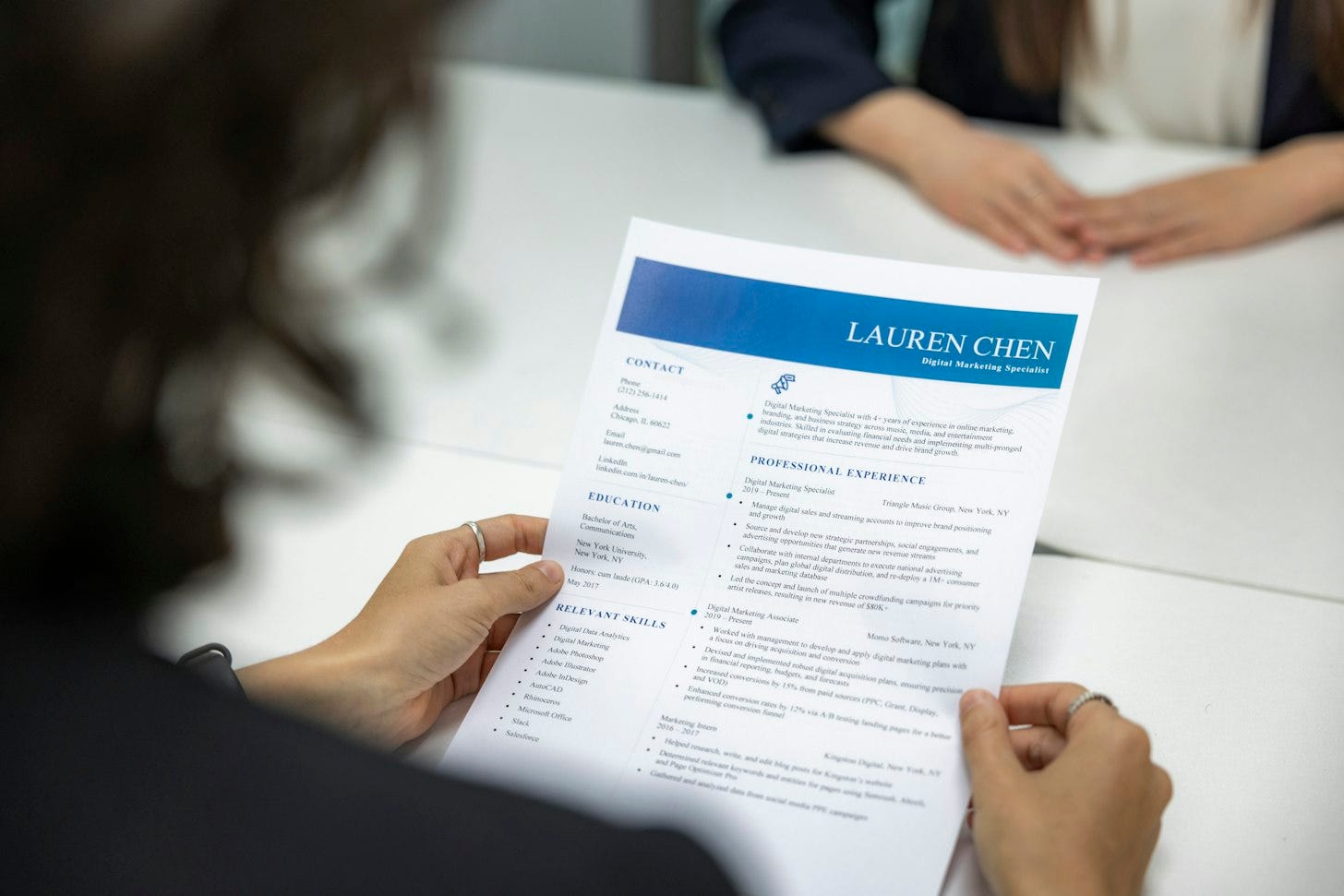
Parsing. Software extracts your job titles, dates, skills and education from your resume. If your formatting confuses the parser, with tables, columns, graphics or unusual headings, information can get lost before anyone evaluates it.
Matching. The system compares your profile to the job description and often to the profiles of people the company previously hired or rated highly.
Scoring and ranking. You get a score. Candidates are sorted. Recruiters typically start at the top and work down until they have enough people to interview.
Knockout questions. Answer one screening question "wrong," such as willingness to relocate or a salary expectation, and you may be filtered out automatically.
Where It Goes Wrong
The pitch for AI screening is that it's faster and more objective than tired humans. Faster, yes. Objective is more complicated.
It learns from the past, including past bias. Amazon famously scrapped an experimental recruiting tool after discovering it penalized resumes that included the word "women's," as in "women's chess club captain." The system had learned from years of hiring data dominated by men. Nobody programmed it to discriminate. It simply copied the pattern.
It rewards keyword matching over ability. A brilliant candidate who describes their work in different words than the job post can rank below a mediocre one who mirrors the posting perfectly.
It struggles with nontraditional paths. Career changers, returning parents, veterans, self-taught workers and people with gaps often look "off-pattern" to an algorithm, even when they're exactly what a team needs.
It's a black box. Candidates rarely know why they were rejected. Often, recruiters don't either.
It escalates into an arms race. Applicants now use AI to write resumes, so employers use AI to screen them, so applicants use more AI to beat the screeners. Everyone is generating more text and understanding less. It's the hiring version of the AI arms race of irrelevance.
Regulators Are Starting to Notice
Some jurisdictions have begun requiring transparency or bias audits for automated hiring tools, and employment regulators have warned that existing anti-discrimination laws still apply when a computer makes the call. Rules are evolving and vary by location, so if you think you've been unfairly screened, it's worth checking what applies where you live.
How to Get Past the Screen (Without Gaming Your Integrity)
You can't control the algorithm. You can control how readable you are to it.
Use a clean, simple format. Standard headings like Experience, Education and Skills. No tables, text boxes or graphics for important information. A plain, well-structured document usually parses best.
Mirror the job's language, honestly. If the posting says "customer success" and you wrote "client support," use their term when it accurately describes your work. Don't stuff keywords you can't back up. A human will eventually ask.
Lead with results. Numbers, outcomes and specifics help both the software and the person who reads your resume after it.
Answer knockout questions carefully. They're often automatic filters. Read them twice.
Go around the gate. Referrals, direct messages to hiring managers and networking still bypass much of the screening. A warm introduction remains one of the most effective ways to get seen by a person.
Tailor, but don't let AI write you into a cliché. Recruiters increasingly recognize generic AI-written resumes. Use AI to tighten your wording, not to invent your story. (Here's how to spot AI-generated content, the same signals recruiters notice.)
The Bigger Picture
AI screening is part of a broader shift in how work gets allocated. The same pressures hollowing out entry-level jobs are reshaping how people get into those jobs in the first place. And as I've argued in Which Jobs Will AI Replace First?, recruiting coordination itself is one of the roles being automated fastest.
Let's be clear: there's nothing wrong with using software to handle volume. The problem is pretending that software is neutral, then hiding behind it.
Hiring is one of the most consequential decisions a company makes about a human being. It deserves at least one human who actually reads the application.