

There is a particular art form that Silicon Valley has perfected over the decades, and it deserves more appreciation than it receives. It is the art of announcing that you are charging customers more money while making them feel vaguely grateful about it. Apple, with characteristic elegance, has just delivered another masterclass. The company is raising prices on iPads, MacBooks, HomePod speakers, and Apple TV devices, and the official explanation involves AI, chips, and the irresistible forces of progress. Let us take a moment, as a service to the reading public, to translate what is actually being said here.
The AI Economy Is Working Exactly As Intended — For Someone
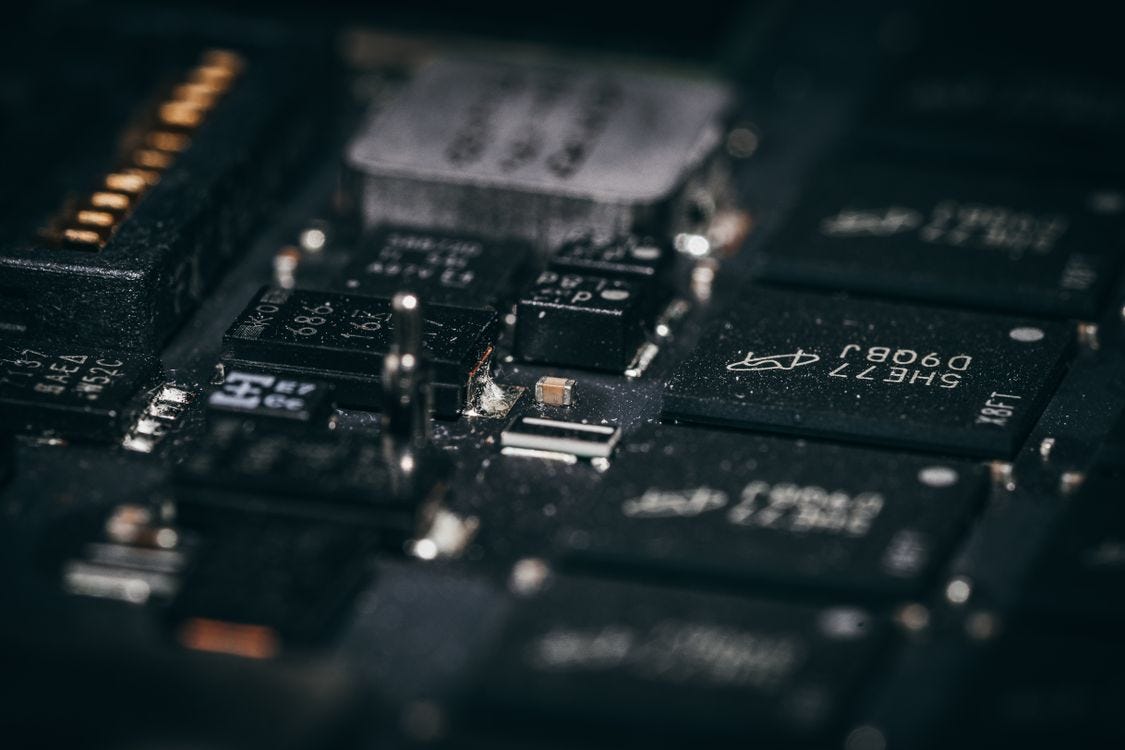
The stated cause of Apple’s price increases is straightforward: AI-driven demand for memory chips has pushed component costs higher, and those costs are now finding their way into consumer hardware prices. Data centers around the world are consuming enormous volumes of the same memory chips that go into your iPad, and basic supply economics has done the rest. That much is real, and it is not particularly complicated.
What is worth pausing on is the framing. When technology companies absorb unexpected costs internally, we hear about “margin pressure” and “headwinds” in earnings calls, language designed for investors. When those same costs are passed to consumers, we hear about innovation, the future of computing, and the transformative power of AI — language designed to make a price increase feel like an invitation to participate in something historic. The underlying transaction is identical. The vocabulary does a great deal of work to make them feel different.
A Glossary of Terms You Will Encounter This Season
In the interest of clarity, a brief translation guide for announcements you are likely to see in the coming months, as other hardware manufacturers follow Apple’s lead.
“AI-optimized memory architecture” means the chip costs more. “Premium silicon for next-generation workflows” means the chip costs more. “Engineered for the intelligence era” means the device costs more because the chip costs more. “We remain committed to delivering exceptional value” means the price has gone up and the marketing team has been asked to say something reassuring.
None of this is fabricated. These are the patterns by which hardware price increases have been communicated for years, and AI has simply given the genre a new vocabulary. Previously, the justification might have referenced 5G readiness, or OLED display technology, or edge computing. The surrounding language shifts with the technology cycle; the underlying message — your product now costs more, and here is a reason that sounds large and inevitable — stays remarkably consistent.
What AI Actually Has To Do With Your HomePod
Let us be genuinely specific about what is happening here. AI at the data center level is real, consequential, and resource-hungry. Large language models require enormous volumes of high-bandwidth memory, and the companies building AI infrastructure are competing aggressively for that supply. That competition has genuinely tightened the memory chip market and pushed prices upward through the supply chain. So far, so factual.
Here is the part that deserves a gentle spotlight: the AI capabilities in the HomePod mini and Apple TV are, by any honest measure, not what is driving global memory demand. The features that justify the word “intelligence” in Apple’s current marketing — Siri improvements, on-device processing, contextual suggestions — are real additions to these products. They are not, however, why NVIDIA’s data center customers are ordering memory at scale. The causal chain runs: AI infrastructure boom raises chip prices, chip prices flow through to consumer hardware, consumer hardware gets more expensive, Apple explains this by referencing AI. The explanation is technically accurate at every step and yet gives the impression, probably intentional, that your new HomePod is somehow adjacent to the frontier of artificial intelligence research.
The Corporate Theater of Inevitable Progress
What makes Apple’s communication particularly instructive — and this is meant as genuine analysis, not simple criticism — is how thoroughly it has internalized the grammar of inevitability. Price increases are not presented as decisions. They are presented as conditions, like weather. The AI revolution is happening. Memory is expensive. Prices reflect reality. What would you have us do?
This framing is useful because it is not exactly wrong. Memory prices have increased. Apple did not manufacture the geopolitical and commercial dynamics of the AI investment cycle. The costs are real. But “real costs exist” and “we are choosing to pass them to consumers rather than absorb them” are two distinct sentences, and the industry has become extraordinarily fluent in the first while going conspicuously quiet on the second. Decisions presented as conditions are harder to question, which is precisely why the presentation is so carefully maintained.
Other manufacturers will make the same choice in the coming product cycles, and they will reach for the same vocabulary. The AI premium will become a standard line item in consumer electronics pricing, normalized through repetition until it reads as obvious as a materials surcharge or a shipping fee. By then, the conversation will have moved on to the next inevitable force, and a new glossary will be waiting.
How A Reader Might Actually Respond To This
It would be easy to read all of this as an argument for cynicism, but that is not quite the point. Understanding the language that surrounds a price increase is not the same as concluding that the product is not worth buying. Apple’s hardware remains, for many users, genuinely excellent. The integration of on-device intelligence features is real, the ecosystem value is real, and some portion of the premium reflects genuine engineering.
The more useful response is simply to separate the two conversations: what the product does, and what story is being told about why it costs what it costs. Consumers who can hold those apart are better positioned to make actual decisions — to evaluate whether the new MacBook at its new price solves their problem, rather than being swept along by a narrative about the intelligence era that was written, understandably, by people who benefit from the purchase.
Apple raising prices is not scandalous, and the AI chip supply pressure driving those increases is genuinely real. What this particular moment illustrates, with uncommon clarity, is how thoroughly the technology industry has developed a language designed to turn cost decisions into progress announcements. The price goes up. The story gets larger. The consumer is invited to feel like a participant in something historic. That is the translation. What you do with it is up to you.