

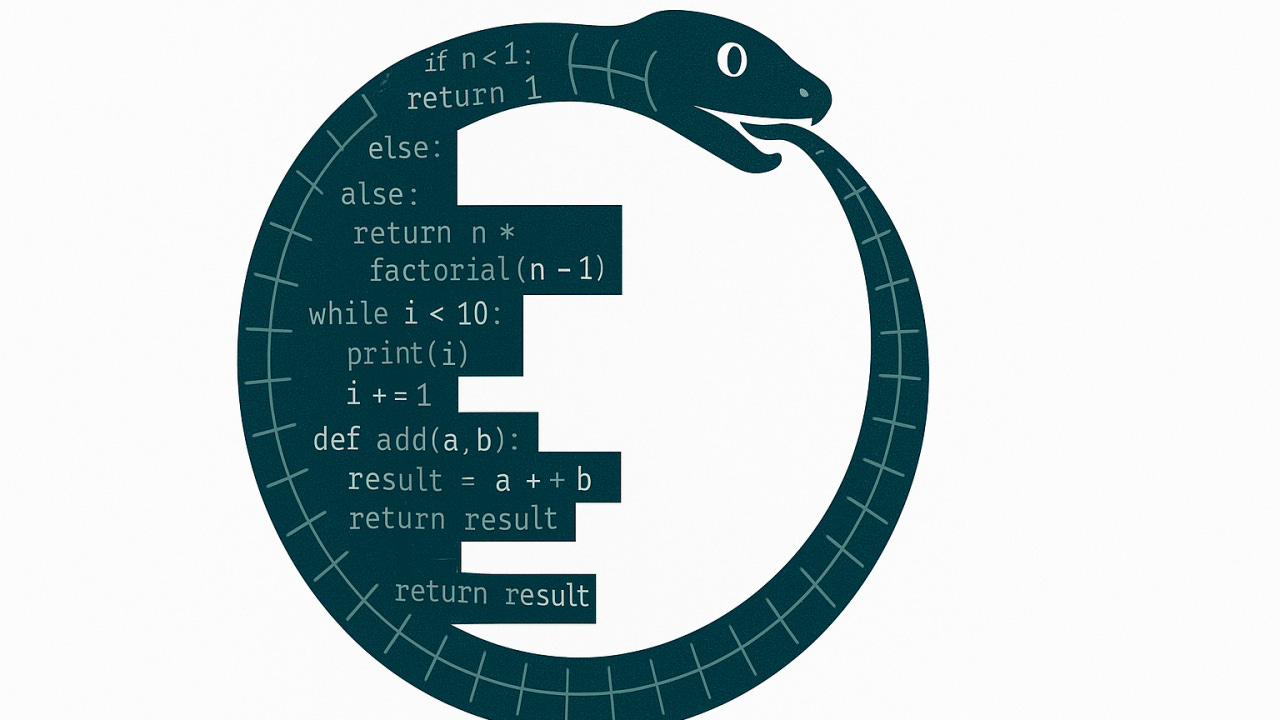
There’s something a little ironic about the people most excited about AI.
They’re not middle managers. They’re not baristas. They’re not Uber drivers. The people most thrilled about AI—the ones demoing their side projects, dropping open-source models on GitHub, and writing Medium posts like “10x Your Productivity with AI” every week—are the exact same ones with the power to automate the rest of us out of relevance.
And the wildest part? They’re doing it with a smile.
The Coders Are Coming
Let’s be clear: the AI boom is not being driven by philosophers pondering machine consciousness. It’s being driven by engineers. Software devs, ML researchers, product people. Folks who live in Jupyter notebooks and think a good weekend is rewriting someone’s entire workflow in Python.
And right now, these engineers are racing to automate everything they don’t want to do.
Customer service? Automate it. Writing copy? Prompt it. Data cleaning? Pipeline it. Your job? Well, if it can be turned into a flowchart, it’s probably next.
They’re not doing this out of malice. They just see inefficiency and reach for code. That’s what they’ve always done. But the difference now is that AI isn’t just replacing physical labor like in past waves of automation—it’s coming for the soft skills. The knowledge work. The creative stuff. The stuff we thought was safe.
Not Just Blue Collar This Time
For decades, we were told to “learn to code” as a hedge against automation. That’s cute.
Because now, the coders themselves are automating coding. Tools like GitHub Copilot can already handle a surprising chunk of dev work. AutoGPTs can string together complex multi-step tasks. And open-source LLMs are being fine-tuned to replace increasingly specialized skills: legal analysis, tax accounting, financial modeling.
In other words, the moat we built around our white-collar knowledge work? It’s draining fast.
Think of it like this: If AI is a robot army, then today’s software engineers are the generals—and they’re pointing the cannons inward.
AI as the New Leverage
Why are they doing it? Because AI is leverage. And capitalism loves leverage.
Let’s say you’re a startup founder with a team of five. If you can build an AI agent that replicates the output of ten people, you just 3x’d your company’s productivity—without hiring a single soul. That’s not dystopian; that’s a demo on Product Hunt.
AI gives tech workers an edge in the same way machinery once gave factory owners an edge. They can do more with less. And the “less” increasingly includes you.
The people building AI aren’t trying to destroy jobs. But they are trying to remove friction. And in a system that rewards efficiency above all else, friction looks a lot like a salary.
Let’s Talk About the Class Divide
There’s something else going on, too—a growing cultural rift between those who build AI and those who live downstream from it.
To the AI elite, job displacement isn’t a crisis. It’s progress. If your job can be done by a model, they argue, maybe it wasn’t that valuable to begin with. Brutal? Yes. But also deeply revealing.
It shows that the people creating AI often don’t understand—or don’t value—the messy, human elements of work. They don’t see the nuance in a customer complaint, the judgment in a hiring decision, or the trust built in a long-term client relationship. If it’s not quantifiable, it’s invisible.
This is where the real danger lies. Not just in losing jobs, but in losing the meaning behind them.
The Disruption Is Uneven
To be fair, not all jobs are equally at risk. But AI doesn’t have to automate everything to cause disruption—it just has to tip the balance.
Take copywriters. If a company can use ChatGPT to write 80% of their content and hire one person instead of three to edit and polish it, that’s a net job loss. Same for paralegals, customer support reps, junior analysts, entry-level designers. The AI doesn’t have to be perfect. It just has to be good enough to shrink the team.
This isn’t theoretical. It’s already happening. Startups are bragging about how few employees they need. VCs are asking how much AI a team uses before they ask what product they’re building. And entire industries are quietly restructuring around AI tools—tools built by people who, not long ago, were just trying to automate their own workflows.
So What Now?
If the people building AI are the ones best protected from its impacts, then we’re facing a future where power consolidates—again—around those with technical fluency and capital leverage. The rest? They get to “upskill” or “pivot” or whatever euphemism we’re using for “figure it out while the rug is pulled out from under you.”
This isn’t just a tech story. It’s a labor story. An economic one. A social one. It’s about how we decide what work is worth. Who gets to decide that. And whether we want to keep playing a game where the rules change every time the engineers get bored.
Because right now, the coders are automating us out of jobs we haven’t even trained for yet. And they’re doing it faster than anyone is planning for.
Not because they’re evil. Just because they can.